In an open-plan home, your floor has a big job to do. It needs to connect the kitchen, dining and living areas while handling everything from cooking spills and dining chairs to everyday foot traffic.
Because you're seeing so much of the floor at once, the tile also has a major impact on how the whole space feels.
At Tile Fusion, we usually recommend starting with practicality, then looking at colour, size and finish. The right floor tile should work across every part of the open-plan area rather than looking great in one corner and being impractical somewhere else.
Here’s what we look at when choosing floor tiles for an open-plan home.
Start With One Continuous Floor
One of the easiest ways to make an open-plan home feel connected is to use the same floor tile throughout the main living areas.
Running one tile through the kitchen, dining and living zones creates visual continuity and can make the overall space feel larger and less broken up.
You don't need different flooring to define every zone. Kitchen islands, dining tables, rugs, furniture and lighting can do that job while the floor remains consistent.
This also gives you more freedom to change furniture, cabinetry and colours later without having to work around several different flooring finishes.

Choose a Tile That Can Handle the Busiest Area
When one tile runs through several spaces, choose it based on the area that will work it hardest.
In most open-plan homes, that's the kitchen.
There are spills, dropped utensils, chairs moving around and regular cleaning. If the tile works well there, it will generally make sense in the connected dining and living areas too.
Porcelain is one of the first materials we'd consider. It's dense, durable, has very low water absorption and is available in a huge range of designs.
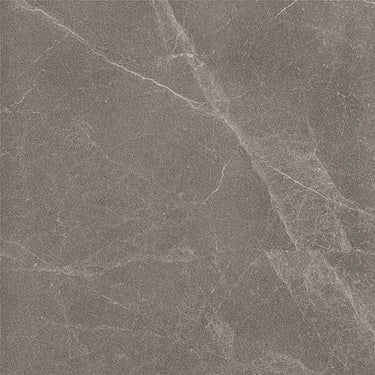
Stone-look, concrete-look, terrazzo-look and timber-look porcelain can all work particularly well across larger spaces.
Think Carefully About Tile Size
Large-format tiles are popular in open-plan homes for good reason.
Fewer grout joints create a cleaner visual field, allowing the floor to feel more continuous. This can work particularly well with stone and concrete-look porcelain where you don't want the grout grid becoming the main feature.
But bigger isn't automatically better.
The ideal format depends on the proportions of the room, kitchen island, doorways and overall layout. Very large tiles can sometimes create awkward cuts around irregular walls or fixed cabinetry.
For many projects, a medium-to-large format gives you the clean appearance you're after while still working comfortably with the dimensions of the room.

Choose a Colour You Can Live With Across a Large Area
A sample tile might look fairly neutral in your hand. Multiply it across 50 or 100 square metres and that colour becomes a major part of the home.
That's why undertones matter.
Warm greys, greige, beige, limestone and soft concrete tones are popular because they can work with a broad range of cabinetry, furniture and timber finishes.
Lighter tiles can also help reflect natural light, while darker floors can give a large open area more depth and definition.
At Tile Fusion, we'd always suggest viewing samples alongside your cabinetry, benchtop, paint colours and timber finishes before deciding.

Look at Pattern Variation
If you're choosing stone, marble, terrazzo or timber-look porcelain, don't judge the range from one tile.
Look at several pieces together.
Good stone-look ranges often include multiple faces or patterns to reduce obvious repetition across a large floor. This becomes especially important in an open-plan home because you're viewing so many tiles at once.
Ask how much variation you should expect and look at the overall effect from a few metres away.
Sometimes a subtle stone look works better across a large space than a heavily veined design that looked impressive as a single sample.
Matt or Polished Finish?
Finish affects both the appearance and practicality of an open-plan floor.
Polished tiles reflect more light and can create a sharper, more formal look, but they may also show marks, reflections and everyday dirt more easily.
Matt and softly textured finishes tend to create a quieter appearance and can be easier to live with across busy kitchens and living areas.
Don't choose based on matt versus polished alone, though. Check that the particular tile is suitable for the floor and application.
Texture matters too. A heavily textured tile may provide a particular look or performance characteristic, but it can require more effort to clean.

Don't Let Grout Take Over
Across a large open-plan floor, grout becomes a significant part of the finished appearance.
If you want the floor to feel continuous, choose a grout colour relatively close to the tile. This helps the joints sit quietly rather than turning the floor into a visible grid.
Contrasting grout can work when you deliberately want to emphasise the tile shape or pattern, but we'd use it carefully across a large area.
Layout matters as well. With rectangular tiles, running the format along the main sightline can help draw your eye through the room.
Plan the tile layout before installation so cuts around islands, doorways and walls feel balanced.
Define Zones Without Changing Tiles
You don't need to change flooring every time the function of the room changes.
In fact, too many flooring transitions can work against the reason you chose an open-plan layout in the first place.
Instead, use furniture and other design elements to create zones.
A rug can define the lounge, pendant lights can anchor the dining table, and a kitchen island naturally separates the cooking area.
Keeping one tile underneath all of these elements allows the different zones to feel connected rather than chopped into separate rooms.
Think About Indoor-Outdoor Flow
If your open-plan living area connects directly to an alfresco, courtyard or patio, consider the transition early.
Some porcelain collections offer coordinating indoor and outdoor finishes. This means you can maintain a similar colour and stone look while using a more appropriate surface outside.
The outdoor tile still needs to be suitable for exterior conditions and have appropriate slip resistance.
Using coordinating products can make the outdoor area feel like an extension of the living space without compromising practicality.
See the Tile in Your Home Before Deciding
Open-plan flooring is a large commitment, so samples are particularly important.
Look at your preferred tiles in natural daylight and artificial light. Place them next to cabinetry, benchtops, paint, timber and other finishes.
Then look at them from a distance.
At Tile Fusion, we often tell customers that the best open-plan floor isn't necessarily the tile that demands the most attention. It should give everything else in the room a strong foundation.
If you're choosing tiles for an open-plan home, bring your plans, samples or inspiration into Tile Fusion. We can compare formats, colours and finishes and help you narrow down which options make the most sense across the whole space.